
Cattaraugus & Allegany COAD
Prepare. Respond. Recover.
Is Our Community Ready for Disaster?
Floods, storms, and other disasters can strike any community, anytime. How prepared are we?
Nonprofits and emergency services can work together to prepare, respond, and help our community recover faster when disasters hit.
A COAD, or Community Organizations Active in Disaster, is a local network of community groups that works with government agencies to coordinate human services during disasters.
COADs, which can include nonprofits, faith-based groups, and businesses, enhance a community's ability to prepare for, respond to, and recover from emergencies by sharing resources and services efficiently.
Join the Cattaraugus & Allegany Counties’ COAD. Let’s get ready — together!
First COAD Meeting Concluded
The meeting was held online 1 p.m., Wednesday, January 21, 2025.
Committees are being formed.
Going forward, committee meetings will be set by their committees. The next full COAD meeting will be held in Spring 2026, date TBA.
Join the COAD email list
Note: If you register for meetings, you will automatically be added to the email list.
Respond & Recover | Leaders Explore Forming Disaster Response Group for Cattaraugus & Allegany Counties
More than 50 representatives from local nonprofits, emergency services, government agencies, and community organizations recently met at Jamestown Community College to discuss creating a Community Organizations Active in Disaster (COAD) group for Cattaraugus and Allegany Counties.
The meeting, hosted through the Cattaraugus Nonprofit Hub, introduced the concept of a COAD and explored how a coordinated local network could strengthen our region’s ability to respond to and recover from disasters.
We were honored to welcome four expert presenters who shared their experience and guidance:
Melissa Axley, New York State Division of Homeland Security and Emergency Management, Individual Assistance Recovery/Voluntary Agency Liaison Supervisor
Barbara Hubbell, Director of Community Impact with United Way of the Southern Tier
Tim Marshall, Director of Public Safety at Steuben County
Scott Golden, Allegany County Director of Emergency Management
Understanding COADs: Cooperation, Communication, Coordination, and Collaboration
Melissa Axley opened the session with a comprehensive overview on COADs, introducing the history behind these nonprofit-led coalitions that bring together community and faith-based organizations, private sector partners, and government agencies.
She stressed the foundational principals of Cooperation, Communication, Coordination, and Collaboration – the Four C’s – in disaster preparedness, response, and recovery.
Among the many benefits of forming a COAD, Axley highlighted:
Strengthened community resiliency through collaboration among local, state, and national partners
Empowering communities to prepare for and recover from disasters
Coordinating funding, services, and resources to reduce duplication and confusion
Shortening recovery time for individuals and communities
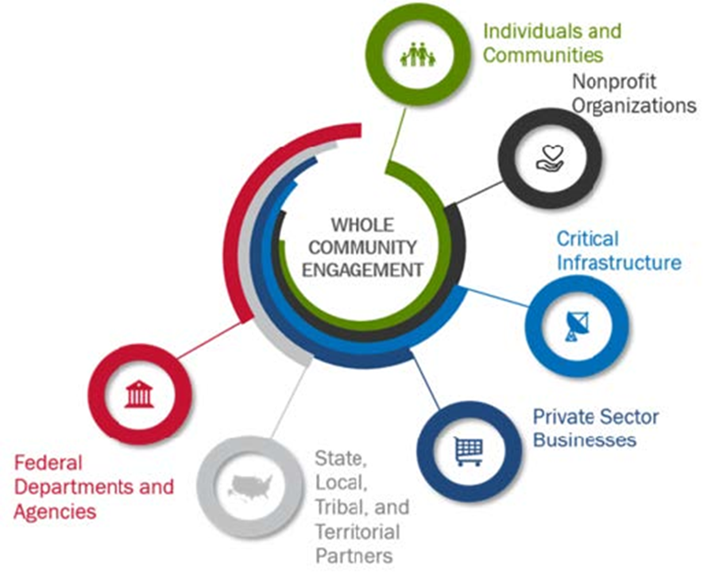
She also outlined the types of stakeholders who typically participate in a COAD, including emergency managers, nonprofits, faith-based and community-based organizations, the private sector, county agencies, and special interest groups.
Examples of stakeholders from other New York COADs include the United Way and 211, American Red Cross, Salvation Army, Catholic Charities, Habitat for Humanity, Legal Aid, mental health and social services agencies, hospitals, schools, and animal welfare organizations.
To illustrate how COADs work in practice, Axley shared examples of how member organizations contribute during different phases of emergency management—from preparedness activities such as training and education, to response functions like volunteer management and donations coordination, to recovery work including disaster case management and long-term housing.
Axley also provided links to the New York VOAD COAD Toolkit, Capacity Matrix, and Activation Guidelines, all of which are available at newyorkvoad.org/resources, as well as national guides from FEMA and the U.S. Small Business Administration to help communities plan for coordinated recovery.
Lessons from Established COADs
Barbara Hubbell and Tim Marshall shared the story of how Steuben County built its COAD following severe flooding from Tropical Storm Fred and Tropical Storm Debbie.
Their presentation, The Value of COADs in Emergency Management, highlighted how COADs can enhance community resilience through public-private collaboration and play a key role across all four phases of emergency management: Preparedness, Response, Recovery, and Mitigation.
They noted that COADs are not command-and-control structures but partnerships built on cooperation and shared purpose. Key functions often include case management, managing unmet needs, and coordinating donations.
One key takeaway: A few motivated partners can literally change their community.
Marshall shared that Steuben County’s COAD developed a family-based case management system in which each family affected by a disaster worked with one coordinated case manager from a COAD partner organization (such as Community Action or Catholic Charities) supported by United Way and 211.
This approach reduced confusion, improved communication, and ensured families received the right help at the right time. Their secret to success? Using shared digital tools like Microsoft Teams to coordinate long-term recovery work.
Marshall and Hubbell also discussed lessons learned, including the importance of encouraging cash donations rather than material goods, which can become logistically challenging.
Local Coordination: Integrating with Existing Structures
Allegany County Emergency Management Director Scott Golden concluded the session by discussing how a local COAD could integrate with existing emergency response structures and county plans.
He presented a draft* Access and Functional Needs (AFN) Plan, created by the Allegany County Office of Emergency Management in partnership with community stakeholders, to ensure equitable access to emergency services for all residents, regardless of ability, language, age, or medical condition. *Because the plan is in draft form, we won’t link it, but we’re providing as many of the details as possible.
Golden explained that the AFN Plan operates under the state’s Comprehensive Emergency Management framework and follows the C-MIST model – Communication, Maintaining Health, Independence, Support and Safety, and Transportation – to guide inclusive planning and response.
Key priorities of the plan include:
Accessible communication, such as multilingual alerts, plain-language messaging, and partnerships with trusted community organizations
Maintaining health, including mapping AFN populations and ensuring access to medications, durable medical equipment, and backup power
Supporting independence through assistive technology and personal care services
Ensuring safety, including family and pet reunification procedures and private spaces for caregivers
Providing accessible transportation through memorandums of understanding with local providers and paratransit coordination
Golden emphasized the guiding principles of equity, inclusion, and whole-community engagement, along with compliance with the Americans with Disabilities Act and related federal guidance. The plan calls for annual training and drills, including the participation of community-based organizations, to ensure effective and inclusive emergency response.
Next Steps: Join the COAD
The meeting marked the first step toward forming a Cattaraugus & Allegany Counties COAD, a collaborative, community-driven effort to improve local preparedness and resilience.
Future meetings will focus on identifying regional partners, developing an organizational framework, and outlining shared goals.
By working together now, during blue sky days, we can ensure our community is stronger and better prepared when the next disaster strikes.
Sign up here to receive updates on the Cattaraugus & Allegany Counties COAD
Learn more about New York’s VOAD
Voluntary Organizations Active in Disaster
State/Territory VOADs are associations of organizations that lead response efforts, communicate urgent needs to the wider National VOAD network, and provide assistance to communities affected by disaster.
The membership of New York VOAD consists of both locally based organizations and local representatives of national organizations. Our mission is to strengthen the capabilities of organizations working together in our State/Territory to respond to communities affected by disaster.