

The Rural Outreach Center: Building Relationships Rooted in Dignity
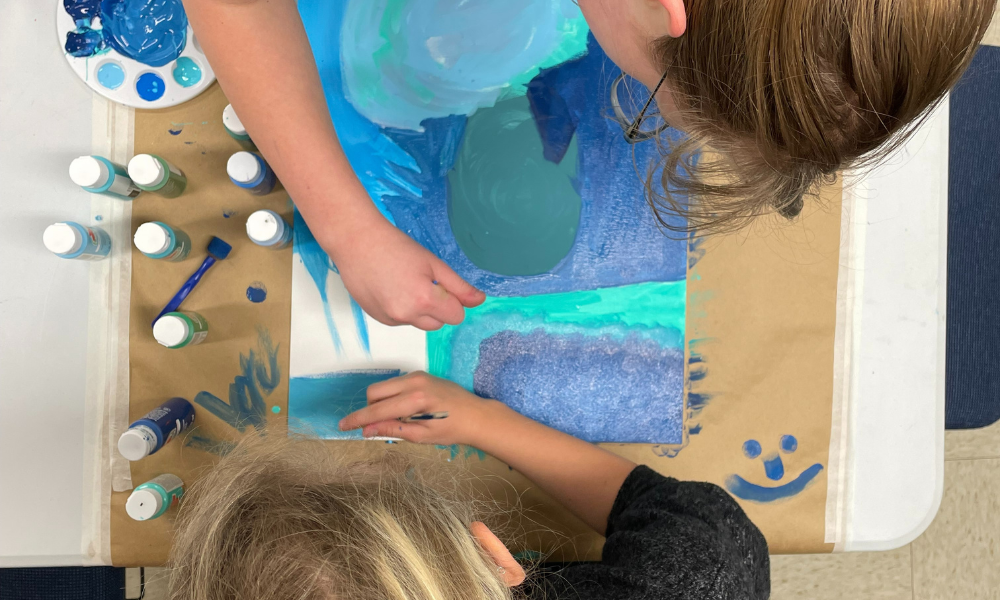
Children at The ROC paint a picture together.
(This article was also published in the 2026 Community Day newspaper.)
In rural communities, support often begins with something simple: a warm winter coat, a conversation at a school event, or a familiar face showing up again and again. For families in central Cattaraugus County, those small moments have become the foundation of growing trust between community members and the staff at The Rural Outreach Center.
Thanks in part to funding from the United Way of Cattaraugus & Allegany Counties, The Rural Outreach Center (ROC) has expanded its outreach efforts deeper into rural parts of the county this year, focusing especially on children and families in the Pioneer and Franklinville school districts.
“The biggest push became outreach, letting Cattaraugus County residents know there was a resource for services that wasn’t in Olean,” said Nichole Barrett, The ROC’s chief program officer. “People in these rural communities face so many barriers, especially transportation. We realized not a lot of people even knew what we had to offer.”
Using grant funding, The ROC staff increased their physical presence in local communities by attending school wellness events, resource fairs, and back-to-school programs while strengthening relationships with school social workers and staff. One of the organization’s biggest successes has been the growth of its partnership with the Franklinville Central School District.
“The relationship with Franklinville has really blossomed,” Barrett said. “Now we’re part of their health and wellness events, their resource fairs, and our winter clothing program there will become a yearly event.”
That winter outreach program has already made a measurable impact. The ROC’s winter coat and boot initiative provided more than 100 children in the Pioneer and Franklinville districts with warm clothing this year, marking a 34 percent increase from previous outreach efforts.
But for Barrett, the numbers only tell part of the story.
In previous years, winter clothing orders were often packed up and quietly dropped off at schools. This year, ROC hosted an in-person distribution event at Franklinville Elementary for the first time.
“It used to feel impersonal – just a drag-and-drop situation,” Barrett said. “There’s something incredibly meaningful about being able to interact with people so they’re not just a number.”
During the event, Barrett watched children excitedly try on brand-new coats and boots while parents and guardians expressed gratitude face-to-face.
“The excitement on the kids’ faces and the gratitude in their parents’ eyes is priceless,” she said. “It humanizes the experience and creates genuine connections.”
Those connections have already led to deeper engagement with families.
Barrett recalled one child she met during the winter clothing pickup who was thrilled simply to receive “his very own boots” and a coat in the exact color he wanted. Just weeks later, the family came to The ROC seeking additional support during a difficult transition after being referred by Franklinville’s social work team.
“Because we had already met them in person, there was comfort there,” Barrett said. “Now that child walks through our doors like he owns the place. You can see the difference in both him and his dad.”
ROC’s services extend beyond emergency assistance or basic needs. Barrett describes the organization’s work as “a circle of care” that focuses on building long-term relationships with families.
Alongside direct services, The ROC has also begun developing partnerships with other organizations serving rural families, including connecting with Saving Grace Outreach in Cattaraugus. Barrett said collaboration between organizations is critical to helping communities that are often overlooked geographically.
“When you look at New York State, so many services are concentrated in Erie County or larger population centers,” she said. “Families in the middle can get lost in the mix.”
Transportation remains one of the largest obstacles facing many rural families. United Way funding has helped The ROC staff travel into communities more consistently, bringing resources closer to families instead of expecting families to travel long distances for help.
As The ROC continues expanding its outreach model into more rural communities, the organization’s staff hopes families will continue discovering not only resources but also relationships rooted in dignity, trust, and care.